
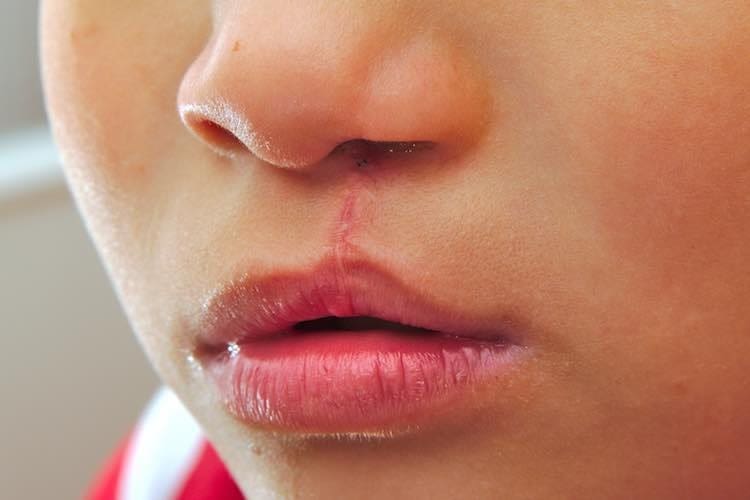
Cleft lip and cleft palate are birth defects of the upper lip and palate (roof of the mouth). About one in every 700 babies will be born with a cleft defect.
Cleft defects can be divided into three main groups:
- cleft lip only;
- cleft palate only; and
- cleft lip and palate.
The cleft (opening) may be present on one side or both sides of the face and sometimes affects the nose as well as the mouth. Cleft defects may occur on their own, or together with other birth defects.
Causes of cleft defects
Cleft lip and palate result from failure of structures in the face and mouth to join together normally in the early stages of pregnancy.
It is not known exactly what causes cleft lip and palate. In some cases there will be a family history of the condition. Babies can inherit a gene from either their mother or father which makes them more likely to be born with a cleft. Environmental factors (what happens during pregnancy) also appear to play a role, as research shows that cleft defects may be more likely in pregnant women who smoke, drink alcohol or take particular medicines.
Treatment of cleft defects
Most babies born in Australia with cleft lip and/or palate will be assessed and managed by a specialised multidisciplinary care team.
Babies born with cleft lip can usually breast feed. However, babies born with cleft palate often can’t generate enough suction to breast feed. Babies with cleft palate may be fed with expressed breast milk or formula using special teats and squeezable bottles. Those with a large cleft palate may need a special plate inserted in the roof of the mouth to help them feed.
Surgery (usually several operations are involved) can restore normal function and appearance in most babies with cleft defects. The timing varies, but surgery to close a cleft lip can usually be performed at 3-6 months of age. Surgical repair of a cleft palate is usually carried out between 9 and 18 months. Some children with cleft palate may require further surgery to improve cosmetic appearance at a later stage. The risks of surgery include poor healing and scarring, damage to nerves and infection.
Associated problems
- Ear problems. Children with cleft palate are more prone to ‘glue ear’ (chronic fluid build-up in the middle ear), which may result in hearing problems. Regular checkups will help to detect this, and, if necessary, drainage tubes (grommets) can be surgically inserted.
- Speech problems. Speech therapy can be helpful for those children with cleft palate who have speech problems.
- Dental problems. Sometimes there are missing teeth due to the defect and dental caries (tooth decay) and other dental problems are also more common in children with cleft palate. This means regular dental check ups will be required and some children may need orthodontic (specialist dental) work.
- Cleft palate may also be associated with disorders of sleep breathing, and these children will need referral for specialist assessment and management.
Support for you and your baby
The Australian Government has a Cleft Lip and Cleft Palate Scheme to help families meeet the treatment costs for specialised services including surgery and dental services. Individuals must register for the scheme before the age of 22.
