
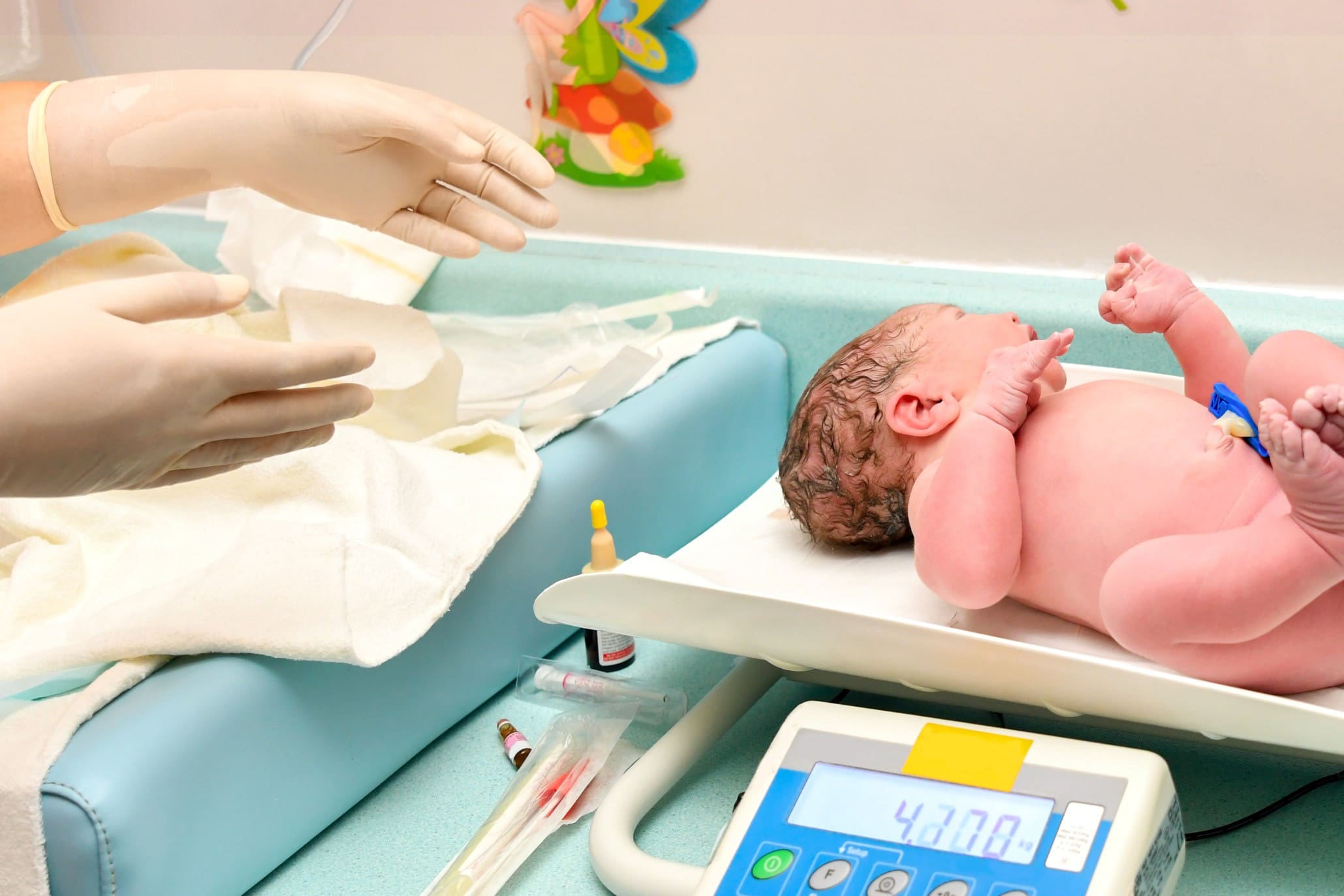
The Apgar score is a standardised way of checking the health of a newborn baby. The Apgar score is used all over the world.
It was named after its creator, Dr Virginia Apgar, Professor of Anesthesiology at Columbia University in the USA, who died in 1974.
Until the publication of Apgar’s Newborn Scoring System in 1953, many internal problems at birth, such as circulatory or breathing difficulties, were missed by doctors because it was usually assumed that a newborn baby was healthy unless there was an obvious sign of something being wrong.
The Apgar score was designed to assess a baby’s health quickly: the checks are conducted at one minute and 5 minutes after birth.
The score is based on 5 elements, which are sometimes named after the letters in Apgar’s name: Appearance, which relates to the pinkness or blueness of the baby’s skin tone; Pulse, which relates to its heart rate; Grimace, which tests the baby’s reflexes and response when the sole of its foot is stimulated; Activity, which checks the baby’s muscle tone; and Respiration, which assesses the rate of the baby’s breathing. Each element is given a score of 0, 1 or 2 to provide a total score of 10.
| The Apgar newborn scoring system | |
|---|---|
| Appearance | Blue or pale skin tone = 0. Pink body but blue fingers and toes = 1. Completely pink = 2. |
| Pulse | No heart rate detected = 0. Slow heart rate (below 100 beats per minute) = 1. Fast heart rate (more than 100 beats per minute) = 2. |
| Grimace | No response when the sole of the foot is stimulated = 0. Baby grimaces when the foot is stimulated = 1. Baby cries when the foot is stimulated = 2. |
| Activity | Baby is limp = 0. Baby shows some muscle flexing in its feet and hands = 1. Baby is active and can flex the muscles in its feet and hands = 2. |
| Respiration | There are no signs of the baby’s breathing = 0. Baby has only a weak cry and can’t seem to get enough air into its lungs = 1. Baby is breathing well and can cry strongly = 2. |
A score of 7 or more is considered normal. However, if the baby has a low score at one minute and a normal score at 5 minutes, this, too, is considered normal, particularly if the birth took a long time, or if the mother was given pethidine during labour, which can affect the baby’s breathing.
A low Apgar score gives doctors a warning signal that they should check the baby for hidden health problems, such as breathing difficulties or internal bleeding, and allows them to give the baby crucial medical attention when it is most needed. Apgar checks may be continued every 5 minutes for up to 20 minutes in babies who receive a low score at 5 minutes.
