
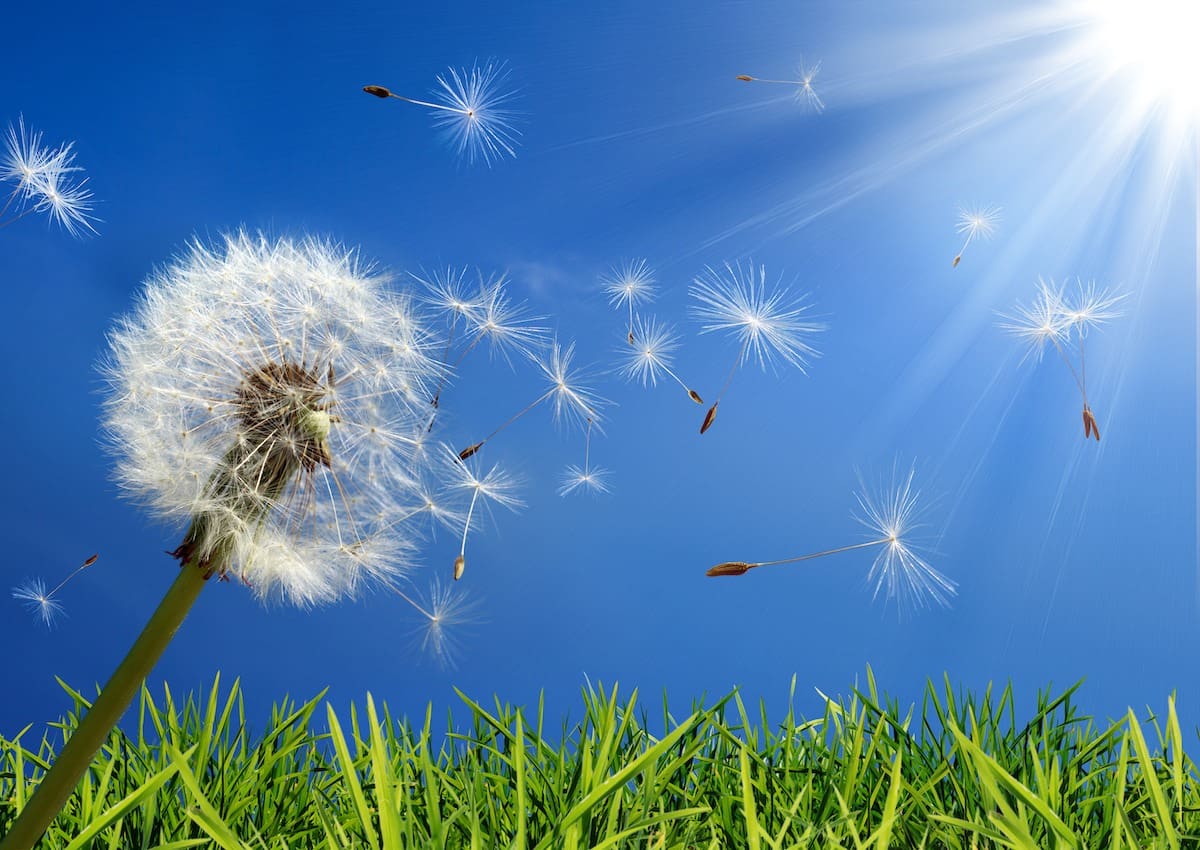
In spring and summer many of us like to spend plenty of time outdoors. However, for some people with asthma, the high pollen levels in the air at those times of the year can bring on asthma symptoms.
What is pollen?
Pollen is the mass of tiny grains produced by a plant for the purpose of fertilisation. Some brightly coloured flowering plants such as wattles have a small amount of relatively heavy, sticky pollen that is spread by birds or insects. Other plants such as weeds, grasses and various trees have smoother, lighter pollen and lots of it. These plants use the wind to spread their pollen, and it is this type of pollen that is a problem for many people with asthma.
How does pollen affect asthma?
Pollen is a common trigger of asthma and produces its effect by means of an allergy. Pollen is thus known as an ‘allergen’, which is an essentially harmless substance that sparks off an abnormal (‘allergic’) reaction in susceptible people. In the case of asthma, the lungs are affected, bringing on the typical asthma symptoms of wheeze, cough, chest tightness and difficulty in breathing.
Your allergy to pollen can mean you may also get the symptoms of hay fever (seasonal allergic rhinitis) — watery and itchy eyes, sneezing, runny or blocked nose, and itchy ears, mouth and throat — which may also benefit from treatment.
When is pollen a problem?
Pollen seasons
Pollen causes more of an impact in Australia during spring and early summer than at other times of the year. However, in the warm northern regions of Australia, grass pollens can cause problems all year round for people with asthma.
The pollen season occurs when plants and trees have flowers. Some plants will shed large amounts of pollen in the early spring, for example, introduced, European street trees such as the London plane; others will shed throughout spring and summer, for example, grasses such as ryegrass and the weed Paterson’s curse; while others can be a problem for most of the year, for example, she-oaks (native pine trees) and the weed plantain.
In the warmer months, most television weather forecasts include a pollen count for the day that is based on the average number of pollen grains measured per cubic metre of air. Pollen count may be described as low, medium, high or extreme.
Weather conditions
‘Thunderstorm asthma‘ is a term used to describe the rise in the number of people with asthma symptoms around the time of a thunderstorm.
Thunderstorm asthma is thought to be caused by several mechanisms, including:
- the increased concentration of airborne asthma triggers (including pollens) during thunderstorms;
- changes in temperature and humidity; and, possibly
- the rain and high humidity around the time of thunderstorms, which may cause pollen grains to break apart and release tiny starch granules that can be breathed into the lungs more easily than larger, intact pollen grains.
Air pollution and pollen
Simultaneous exposure to allergens (such as pollens) and air pollution (such as from diesel exhaust or ozone) may increase the risk for people with asthma and allergies. Pollen allergen may interact with the exhaust particles from diesel engines to create particles that are more easily breathed into the lungs.
So high levels of pollen in the air, as occur in the spring and summer, rain, and high levels of exhaust fumes can mean a high-risk day for people who have pollen-induced asthma.
The worst plants for pollen allergy in Australia
Most of the plants that cause pollen-induced asthma in Australia are introduced species and include:
- ryegrass — used as a pasture species and in lawns — and other exotic (that is, introduced) grasses that produce a large amount of pollen that can be blown long distances in the wind;
- many exotic trees such as elm, oak, ash and birch; and
- weeds such as Paterson’s curse, plantain and ragweed.
The pollen of some native species, such as native pine trees (she-oaks) and White Cypress Pine, can also trigger asthma symptoms.
How to manage the impact of pollen on your asthma
If your asthma seems to be triggered by pollen, you can try the following measures to reduce your pollen exposure; however, research has not yet shown whether this approach effectively controls asthma symptoms.
- Find out which type of pollens can be a problem in your area and aim to avoid them. Many grass pollens contain similar elements, so having a grass-pollen allergy can mean you will have symptoms in response to several different grasses, not just one.
- Check the weather forecast on TV or in the newspaper for the predicted pollen count and plan your day accordingly.
- If possible, try to stay indoors and close the doors and windows on high-pollen days and windy days.
- Get to know the times of day that are worse for your asthma during the pollen season. In rural areas, for example, the evening — between 4pm and 6pm — can be the time of day with the greatest amount of pollen in the air. In other areas, the morning may be worse and should be a time when you try to stay indoors.
- Stay indoors during and after thunderstorms.
- Wear sunglasses when you are outside to help prevent pollen allergen from getting into your eyes.
- When travelling in the car, keep the windows shut and use recirculating air conditioning (if possible).
- Consider wearing a facemask in certain situations when allergy is severe and exposure to high amounts of pollen is unavoidable.
- If you’ve been outside, wash your hands and face when you return home to reduce the amount of pollen allergen on your skin.
- Dry your bed linen and clothes indoors during the pollen season, if possible.
- Consider having a low-allergen garden incorporating low-allergen plants and shrubs and a lawn or ground cover that needs infrequent or no mowing. Low-allergen plants tend to be those that are pollinated by insects or birds, rather than by wind, and include many native trees and shrubs.
Several strategies that don’t involve avoiding pollen may also be helpful.
- Make sure your asthma is as well controlled as possible by seeing your doctor before the pollen season gets under way. Ask about adjusting your preventive medicine for the likely increased exposure you will have to pollens over the coming months.
- Also ask your doctor about having your pollen allergy confirmed with a skin-prick test or blood tests.
- Monitor your asthma control, and follow your asthma action plan to adjust your medicine as instructed when your asthma control drops.
- If you have both asthma and hay fever, ask your doctor about treatments for hay fever (allergic rhinitis) that may help improve asthma control.
- Immunotherapy (repeated doses of very small amounts of pollen allergen over several years to desensitise you) may be a possibility for some people with pollen allergy; ask your doctor.
