
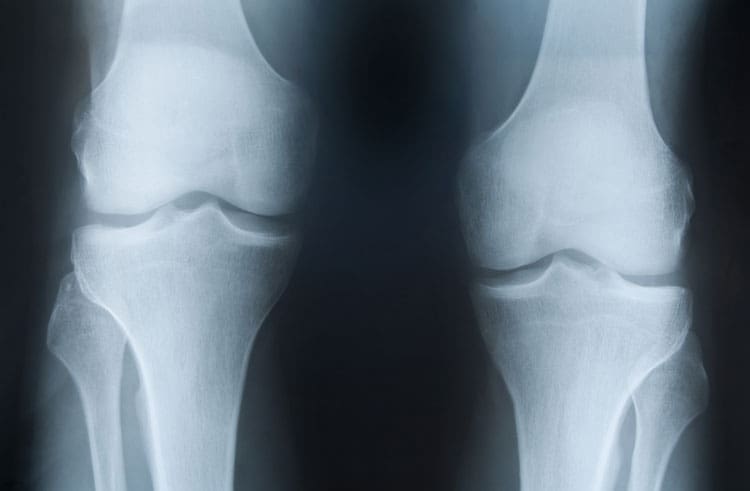
Paget’s disease is a treatable condition that affects the bones, mainly in older people. Affected bones become enlarged, misshapen and weaker than normal. They may also be painful. Any bone in the body can develop Paget’s disease, but it particularly affects the skull, spine, pelvis, legs and arms.
The condition is named after Sir James Paget, a British doctor who described the disease in the 1870s. However, the condition has been around for thousands of years, with some skeletons from ancient Egypt known to have evidence of large, misshapen bones.
Healthy bones are finely balanced
To understand Paget’s disease, it’s useful to learn more about the processes going on in your bones that help them stay healthy.
You might think that your bones don’t change much after you stop growing. But your bones are constantly building new bone and breaking down old bone in a process called bone remodelling. The remodelling process is controlled by two types of cells:
- Osteoblasts, which produce new bone; and
- Osteoclasts, which break down and remove old bone.
Normally, the building of new bone and the breakdown of old bone is in a state of balance, which is why, for most of us, our skeletons stay the same size once we have stopped growing.
But sometimes – like in Paget’s disease – the balance of bone remodelling is upset. The osteoclasts become over-active, which means they break down more bone than normal. The loss of bone triggers the osteoblasts to rapidly produce more bone in an attempt to replace the extra bone being lost.
As a result of new abnormal bone being produced, affected bones become enlarged and misshapen. And because the abnormal bone is weaker and more brittle than normal, it is prone to fractures. Bones affected by Paget’s disease can also be painful.
Causes
The exact cause of Paget’s disease is not known. However, your genes are thought to play a role, because clusters of the condition are seen in some families. Other theories suggest that factors in the environment (such as viral infections) are involved in people who are genetically prone to the disease.
Your race can affect the risk of developing the condition. People from Anglo-Celtic backgrounds (such as from Australia and New Zealand, Britain, Western Europe or North America) are more often affected than people from other ethnic backgrounds. Men are slightly more likely to develop Paget’s disease than women.
Is Paget’s disease common?
Paget’s disease mainly affects older people. In Australia, about 2-4% of people over the age of 55 will have some degree of Paget’s disease, although for most people it will cause no symptoms or major problems.
Symptoms
Many people with Paget’s disease are unaware they have the condition because they have no symptoms or only mild symptoms. For people who do experience problems, their symptoms come on gradually and slowly get worse over time.
The symptoms of Paget’s disease depend on where in the body the abnormal new bone is being produced.
The main symptoms can include:
- Pain or stiffness in the bones (that is often worse at night time);
- Enlarged or thickened bones;
- A feeling of warmth over the affected bones;
- Fragile bones that break easily due to the new bone being weaker than normal;
- Abnormal bending or curving of bones (such a curved spine or bowed legs); and
- Sore joints or arthritis due to damage to the cartilage which lines the ends of bones.
If Paget’s disease affects the bones of the head, it may cause symptoms such as:
- Headaches;
- Loss of hearing, ringing in the ears (tinnitus), or dizziness (vertigo) if the abnormal bone growth presses on the nerves that control hearing;
- Changes in vision or sense of smell as a result of increased pressure on other nerves in the head; and
- An enlarged head – in the days when most men wore hats, suddenly finding that your hat no longer fits was often the first clue to Paget’s disease.
If Paget’s disease affects the bones of the spine, symptoms can include:
- Pain, numbness, weakness or paralysis in different parts of the body, due to the abnormal bone pressing on or pinching nerves in the spinal cord.
Less commonly, Paget’s disease can affect the heart, because the abnormal new bone needs its own blood supply. The extra demand for blood can put strain on the heart which can lead to heart failure in people who already have heart disease.
A very rare complication in less than 1% of people with Paget’s disease is the development of bone cancer in the abnormal bone. This complication usually only affects people who have had the condition for a long time.
If you have unexplained pain in your bones, or if you have noticed changes in any of the bones in your body (including a change in the shape of your head), ask your doctor about Paget’s disease.
Diagnosis
Because most people with Paget’s disease have no symptoms, the disease is often diagnosed by chance after tests have been carried out for another reason. Tests may include:
- X-rays or scans of the bones (such as CT scans or MRI scans); and
- Blood tests that show increased levels of particular bone chemicals.
Treatment
If Paget’s disease is found by chance on an X-ray or blood test and there are no symptoms, there is generally little cause for concern, because the condition is unlikely to cause any problems.
There is no cure for Paget’s disease, but if you experience troublesome symptoms, there are a number of treatments available, including:
- Pain relievers (such paracetamol) and non-steroidal anti-inflammatory drugs (NSAIDs, such as aspirin, diclofenac or ibuprofen) that may help reduce bone pain;
- Prescription bone medicines (called bisphosphonates) that can help control the abnormal bone remodelling and relieve bone pain. These medicines can be taken as daily tablets for 2-6 months, or as a single dose given via a drip into a vein in a hospital or clinic. Bisphosphonates may also be recommended for people who currently have no symptoms if the location of the abnormal bone is likely to lead to complications in the future (such as in the spine, base of the skull, major joints, or the arms and legs), or for young people (under 50 years). In Australia, the bisphosphonates used are: alendronic acid; pamidronate; risedronate; tiludronate; and zoledronic acid.
- Calcitonin is a prescription medicine that is used for Paget’s disease that does not respond to other treatments, but it is rarely used;
- Surgery may be necessary for people who have bone fractures or joint damage due to long-term untreated Paget’s disease; and
- Being active can help keep bones and joints healthy, maintain your weight and keep you mobile.
Possible side effects of treatment
Although bisphosphonates are useful to control Paget’s disease, they may cause side effects in some people. Bisphosphonates tablets may cause stomach upsets and irritation to the food pipe (oesophagus), whereas bisphosphonates given through an intravenous drip can sometimes cause a temporary flu-like illness. Extremely rarely, bisphosphonates may cause parts of the jawbone to break down (osteonecrosis of the jaw), but this generally only affects around one in 10,000 to one in 100,000 people.
Monitoring your response to treatment
If you are being treated with bisphosphonates, your doctor will monitor your response with blood tests every 3-6 months. If the results of these tests are normal, you may be able to stop treatment. However, Paget’s disease may return in the future, in which case, bisphosphonates may be restarted.
What is the outlook for people with Paget’s disease?
Fortunately, Paget’s disease is treatable. So the outlook is good for people with mild to moderate Paget’s disease, particularly if the condition is diagnosed and treated at an early stage before major changes have occurred in the bones.
