
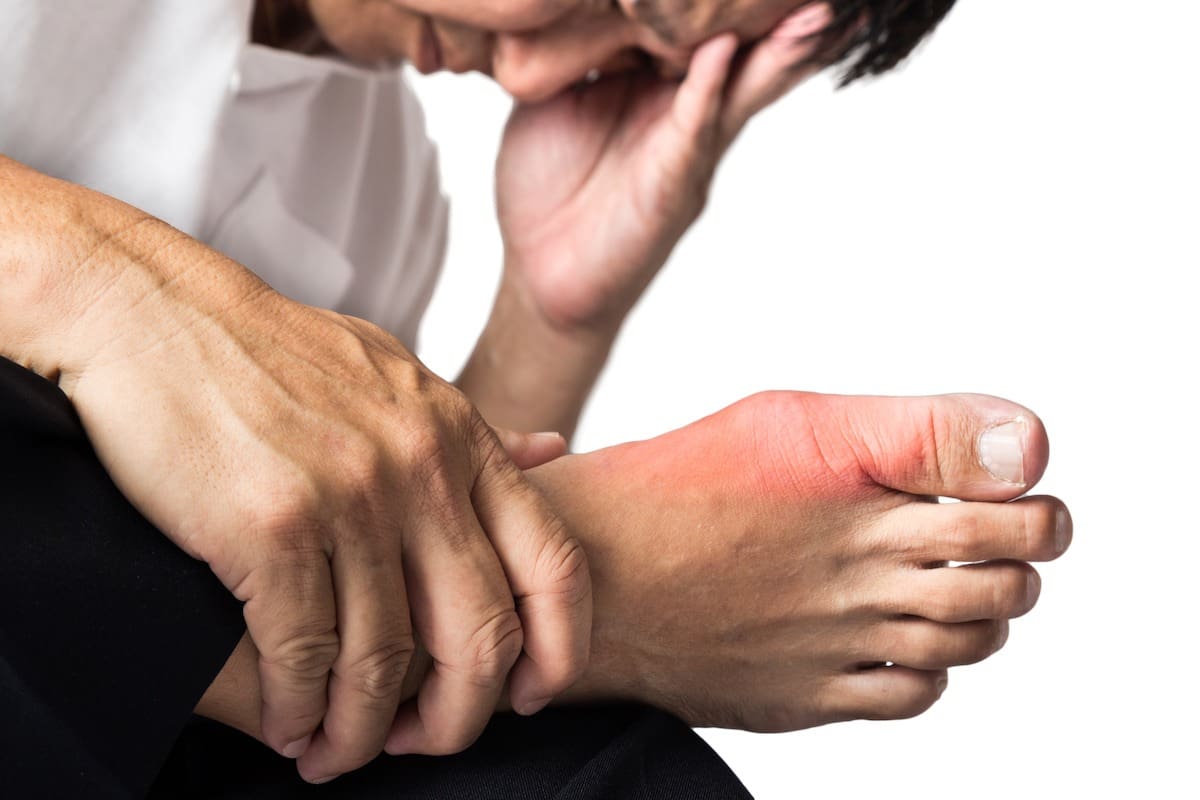
Gout (sometimes called gouty arthritis) is a common type of arthritis caused by too much uric acid in the bloodstream. The uric acid forms clumps of small, sharp crystals inside and around the joints, leading to sudden attacks of severe pain, swelling and redness.
Gout can be very painful but there are ways to treat the symptoms, get relief from gout, and reduce the risk that it will return.
What are the symptoms of gout?
An attack of gout can begin anytime, but it often starts at night. Any joint can be affected – the most common joints are the big toes, middle foot joints, ankles, knees, fingers and elbows. Sometimes it affects more than one joint at a time.
The affected joints can also be extremely tender to touch. Gout can affect any joints, but is most commonly seen at the base of the big toe. It can happen quickly – often people wake up in the middle of the night with severe pain and a feeling like the joint is on fire.
The symptoms of a gout attack include:
- Sudden, intense pain in one or more joints.
- Swelling and inflammation in and around the joint.
- A feeling that the joint is very hot.
- Red, shiny skin around the joint.
- Extreme tenderness (for example, even a sheet over the skin can be unbearable).
- Reduced movement.
- Itchy, flaky skin as the swelling goes down.
Causes of gout
Gout occurs when there are abnormally high levels of uric acid in the blood (called hyperuricaemia) and tissues. Uric acid is a waste product that forms when the body breaks down chemicals called purines. Purines are found in many foods and also occur naturally in the body. Normally, the body’s kidneys filter out excess uric acid and it’s excreted via the urine. But in people with gout, the uric acid accumulates in the body.
This can happen when the kidneys don’t get rid of enough uric acid or when there is an overproduction of uric acid by the body. This build up of uric acid may also cause kidney stones. While high uric acid levels in the blood lead to gout, it’s not clear why some people with high levels of uric acid develop gout but others with the same high levels don’t.
Gout attack
When uric acid builds up it can form small, jagged, needle-shaped crystals. It can take months or even years for the crystals to develop. They usually form in and around joints, and if they get into the small spaces between the joint they can cause severe pain, swelling and redness. This is known as a gout attack.
How long does an attack of gout last?
An attack of gout usually strikes unexpectedly, and gout symptoms often last between 3 and 10 days. Some people might have some ongoing pain or discomfort for several weeks.
Gout attacks often recur and without proper treatment, the attacks may become more frequent. If it’s not treated, gout tends to affect more joints over time.
A person should contact their doctor if they have symptoms of gout so that they can get it treated as soon as possible.
Someone who develops a fever plus severe, worsening joint pain should seek immediate medical attention. It could signal a serious infection inside the joint called septic arthritis.
Who gets gout?
In Australia, gout affects around 70,000 people each year. Gout can affect anyone, but it is much more common in men than women, in particular, middle-aged and older men. In women, gout usually occurs after menopause. Experts have found that the prevalence of gout in elderly male Australians is one of the highest in the world, second only to New Zealand.
Risk factors for developing gout
A person is more likely to develop gout if they have high levels of uric acid in their body, a condition known as hyperuricaemia.
Things that can increase levels of uric acid include:
- Diet: Consuming large amounts of red meat and oily seafood and drinking large amounts of sweetened drinks.
- Alcohol: Drinking excessive amounts of alcohol, especially beer, fortified wine (e.g. port) and spirits.
- Overweight and obesity: Being overweight or obese makes it harder for the kidneys to get rid of uric acid.
- Certain medicines: The use of some blood pressure medications including diuretics, ACE inhibitors and beta blockers, as well as low-dose aspirin, cyclosporin (used to treat conditions such as psoriasis) and some medications used by people who have had an organ transplant.
- Medical conditions: Some diseases that increase uric acid levels include untreated high blood pressure, diabetes, heart disease, kidney disease and the metabolic syndrome.
- Age and sex: Men often have higher uric acid levels; after menopause, women’s uric acid levels may also rise.
- Family history of gout: people are more likely to develop gout if a family member has it.
- Recent surgery or trauma: People who have had a recent operation or experienced recent trauma often have high levels of uric acid in their blood.
Tests for gout
A doctor can often diagnose gout based on the symptoms and a person’s medical history. They will also ask the person about their diet and alcohol intake.
Sometimes the doctor will do blood tests to measure the amount of uric acid in the blood, although this may not be conclusive of gout.
The doctor may want to take a sample of fluid from the joint to check for the presence of uric acid crystals or to check for signs of infection.
X-rays are not usually done but sometimes an ultrasound is done to see if there are crystals in the joints.
Complications of gout
Gout can result in some complications, especially if left untreated.
- Tophi: Sometimes small lumps form under the skin (known as tophi). These look like white or yellowish raised spots and are usually painless. However, because they often form at the tips of the fingers or around the toes, they can make daily activities difficult. Tophi usually take several years to develop, and successful treatment can shrink them or stop them getting bigger.
- Joint damage: If gout isn’t treated it can start to damage the joints. In very serious cases it can cause extensive damage, and surgery may be needed to repair or replace a joint.
- Kidney stones: Some people with high levels of uric acid develop kidney stones. These can make it hard for urine to flow properly and may cause pain when trying to pass urine, or make the person feel as though they need to pee more often.
How is gout treated?
The treatment of gout involves several stages.
- Pain relief for a gout attack.
- Treatment to prevent further attacks.
- Strategies to prevent the complications of gout.
- Management of other medical conditions that can increase the chances of developing gout, such as excessive alcohol intake, high cholesterol, high blood pressure, diabetes and obesity.
Treatment of a gout attack
Australian guidelines recommend treatment with non-steroidal anti-inflammatory drugs (NSAIDs) for an attack of gout. These work to reduce inflammation and pain. Examples include indomethacin (e.g. Arthrexin), naproxen sodium (e.g. Crysanal) and etoricoxib (Arcoxia).
If NSAIDs can’t be tolerated or the person has a history of ulcers then they may try:
- Colchicine (brand names Colgout, Lengout).
- Corticosteroids given by mouth or injected into the joint.
Resting the joint and applying ice packs may also help with pain and inflammation. When the affected joint is a big toe, a box or cage to keep the bedclothes off the toe may be helpful.
Treatment to prevent further attacks
People can reduce their chances of having another attack of gout by taking certain medication and making lifestyle changes to reduce the level of uric acid in the body.
- Urate-lowering therapy (ULT): these medications can decrease the body’s production of uric acid. Examples include allopurinol (e.g. Allosig) and febuxostat (Adenuric).
- Colchicine (Colgout, Lengout) or NSAIDS given for several months can also be used to prevent attacks of gout.
- Uricosuric drugs: These medicines increase uric acid passed in the urine. Examples include probenecid (Pro-Cid).
People experiencing gout attacks should avoid medicines containing aspirin as these can make gout worse.
Lifestyle changes to prevent gout attacks
Preventing acute gout attacks is just as important as gout relief. Prevention of gout generally involves:
- Fluid: Maintaining an adequate fluid intake to promote the excretion of uric acid.
- Losing weight if overweight or obese.
- Exercise: Doing regular exercise.
- Limit alcohol: Reducing alcohol intake and avoiding binge drinking.
A simple change to the types of foods that you eat can help reduce the frequency and severity of gout attacks. Find out which foods are best avoided or eaten in moderation, and other dietary changes that can help prevent gout.
Gout diet
Gout is caused by raised levels of uric acid in the bloodstream. Uric acid is formed when compounds called purines are broken down in our bodies. Purines are found naturally in the body and also in certain foods. Some foods contain high levels of purines.
The dietary approach to reducing the frequency and severity of gout attacks is two-pronged:
- limit the body’s production of uric acid; and
- increase the elimination of uric acid.
Reduce purine-rich foods
To reduce the amount of uric acid produced by the body, reduce your intake of purine-rich foods. This table shows foods rich in purines which you can avoid or cut down on.
| Purine-rich foods | |
|---|---|
| Food group | Examples |
| Meats |
|
| Seafood |
|
| Foods containing yeast |
|
| Vegetables* |
|
| *According to Arthritis Australia, purine-rich vegetables appear less likely to cause gout than shellfish and meat. | |
Avoid fructose
It’s also a good idea to avoid fructose — a type of sugar — as it can raise uric acid levels. Fructose can be found in fruit juices; it’s also 50 per cent of table sugar, and in some countries – especially the USA – soft drinks and other foods are sweetened with corn syrup, which is high in fructose.
Drink lots of water
Some substances can affect the level of uric acid in your blood by speeding up or slowing down its elimination from the body.
Drinking plenty of water helps your body flush out uric acid, so if you have gout, aim to drink at least eight glasses of water per day.
Limit alcohol
Alcohol can interfere with uric acid elimination. When you’re having an attack, it’s best to avoid alcohol altogether, especially beer. In between attacks, up to two standard drinks of wine per day should not greatly increase the risk of gout.
Other dietary considerations for gout
Choose low-fat or fat-free dairy products, as they have been shown to reduce the risk of gout. Vitamin C has also been shown to reduce the risk of gout.
A practical approach
Completely avoiding all purine-rich foods is not necessary and could result in you missing out on important nutrients. Fortunately, newer gout medicines have reduced the need for a strict gout diet, however, cutting down on the amount of purine-rich foods can still help to reduce the number of gout attacks and their severity.
Reduce the amount of meat, poultry and seafood in your diet, as animal proteins are high in purines. Try to avoid organ meats, anchovies, herring and mackerel altogether.
Remember, before starting a special gout diet it’s a good idea to get advice from your doctor or a dietitian.
Gout diets and weight loss
Low-purine diets are often low in calories so can also help keep your weight down, further reducing your risk of gout attacks. Gradual weight loss with healthy eating and regular physical activity is the way to go, as crash dieting and rapid weight loss can actually increase uric acid levels and may trigger a gout attack.
Keep taking your gout medicine
While following a gout diet can help limit the severity and number of attacks, it’s unlikely that it will decrease uric acid levels enough to allow people taking gout medicines to stop their treatment.
