Hallucinogenic drugs, also known as ‘psychedelics’, are drugs that change the way a person perceives the world. Hallucinogens affect all the senses, altering a person’s thinking, sense of time and emotions.
They can cause a person to hallucinate — seeing or hearing things that do not exist or are distorted. There are many different kinds of hallucinogens. Some occur naturally, in trees, vines, seeds, fungi and leaves. Others are made in laboratories.
Some examples of hallucinogens include:
- LSD (lysergic acid diethylamide);
- PCP (phencyclidine);
- magic mushrooms (psilocybin);
- ketamine;
- mescaline (peyote cactus);
- morning glory seeds;
- datura.
LSD (lysergic acid diethylamide)
LSD is made from a substance found in ergot, which is a fungus that infects rye. It is a very powerful drug, so only very small doses are usually taken.
Other names
Acid, trips, tabs, microdots, dots.
What it looks like
In its pure state, LSD is a white, odourless powder. It usually comes in the form of squares of gelatine or blotting paper that have been dipped or soaked in LSD. LSD is also sold as liquid, tablets or capsules.
How is it used?
LSD is usually swallowed, sniffed, injected or smoked.
Magic mushrooms (psilocybin)
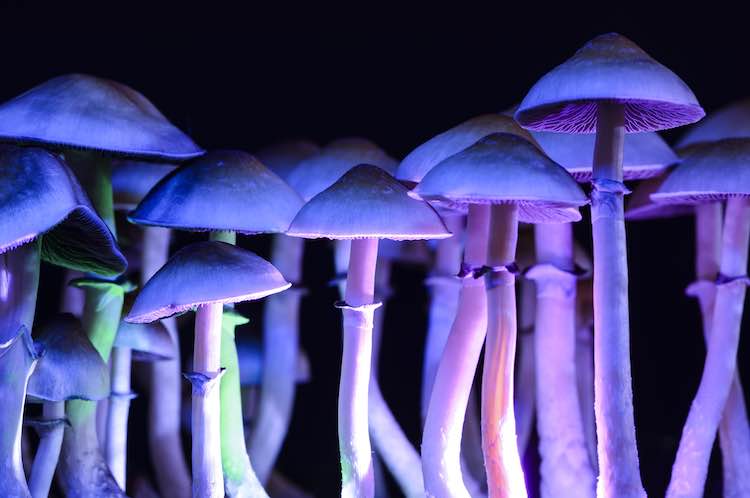
There are several varieties of magic mushrooms — ‘Golden tops’, ‘blue meanies’ and ‘liberty caps’ are some of the types found in Australia that have the active ingredient psilocybin.
Street names
Shrooms, mushies, magics, golden tops, blue meanies, liberty caps.
What they look like
Magic mushrooms look much like ordinary dried mushrooms, or they come as a powdered material in capsules. Synthetic psilocybin appears as a white crystalline powder that may be processed into tablets or capsules, or dissolved in a liquid.
Mushrooms containing psilocybin can often look very similar to other mushrooms that are actually poisonous. Some poisonous mushrooms may cause permanent liver damage or death after being eaten.
How are they used
Magic mushrooms are usually eaten fresh, cooked, or brewed into a ‘tea’. Occasionally, they may be mixed with tobacco or cannabis and smoked.
Ketamine
Ketamine hydrochloride is a dissociative anaesthetic that is sometimes used in medical and veterinary settings.
Street names
Special K, K, ket, kitkat, super K.
What it looks like
Ketamine is a white crystalline powder that can be made into tablets, or dissolved in liquid.
How is it used?
Ketamine is usually swallowed, snorted or injected. It is also sometimes smoked with other substances such as cannabis or tobacco.
Mescaline (peyote cactus)
Mescaline is the active ingredient of the peyote cactus, Lophophora williamsii. It can also be made synthetically.
Street names
Cactus, cactus buttons, cactus joint, mesc, mescal.
What it looks like
In its pure state, mescaline sulphate is a white crystalline powder. Synthetic mescaline may appear as different coloured powders. The peyote cactus contains ‘buttons’ that can be cut from the root of the plant and dried.
For more information, please click on the Alcohol and Drug Foundation (formerly Australian Drug Foundation’s) link below: