What is ecstasy?
Ecstasy is a street name for the drug methylenedioxymethamphetamine (MDMA). It is a type of stimulant that also produces hallucinogenic effects.
Stimulant drugs speed up the messages between the brain and the body, and can make a person feel more awake, alert, confident or energetic.
Although ecstasy is sometimes described as being a mild hallucinogen, it is very rare for a person using ecstasy to hallucinate.
Other names
Ecstacy, E, XTC, eccy, the love drug, pills.
What does it look like?
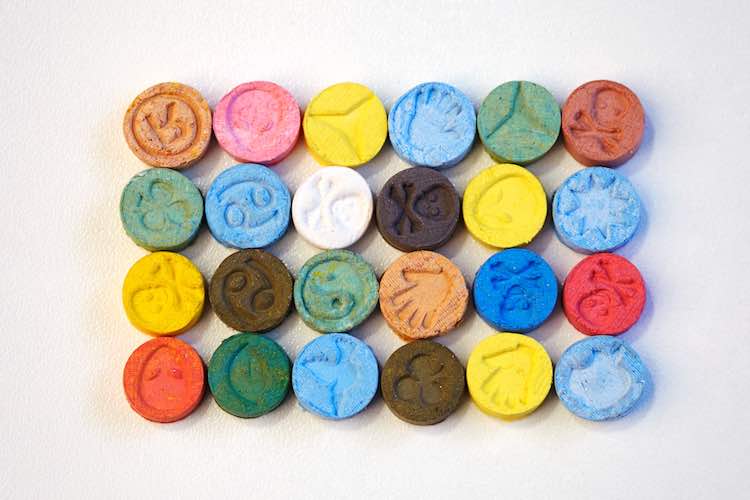
Ecstasy usually comes in the form of a tablet, in various shapes, sizes and colours. Often, the tablets are imprinted with logos and designs from popular culture.
How is it used?
The most common way to take ecstasy is by swallowing.
For more information, please click on the Australian Drug Foundation’s link below.